


















Indoor vs Outdoor Home Sauna: Which Is Right for You?
Choosing between an indoor and outdoor home sauna is about more than just placement; it's about how the sauna integrates into your life, your home's architecture, and the wellness rituals you want to create. Both configurations offer authentic Finnish sauna experiences, but each brings distinct advantages in terms of atmosphere, installation requirements, and long-term enjoyment.
At Finnmark Sauna, we've designed, built, and installed hundreds of saunas across the UK, from compact indoor sanctuaries tucked beneath staircases to expansive outdoor sauna cabins that command attention in contemporary gardens. Whether you're drawn to the distinctive aesthetic of our barrel saunas or the architectural precision of our cube saunas, this guide draws on that experience to help you make an informed decision based on your space, budget, and how you envision using your sauna.
Understanding the Fundamentals: What Makes a Sauna Work
Before comparing indoor and outdoor installations, it's worth understanding what each configuration requires to deliver an authentic sauna experience. Whether situated in your garden or integrated into your home's interior, every proper sauna depends on three core elements:
Thermal performance – The ability to reach and maintain temperatures between 70°C and 110°C, creating the physiological response that defines traditional Finnish sauna bathing.
Proper ventilation – A controlled air exchange system that brings fresh oxygen into the space while expelling stale air, ensuring comfort during extended sessions without compromising heat retention.
Quality materials – Low-resin Nordic timber (such as Aspen, Alder, or thermally modified pine) that withstands high heat and humidity whilst remaining comfortable against bare skin.
These fundamentals remain constant whether you're building a bespoke indoor sauna or installing a ready-made outdoor cabin. What differs is how each configuration achieves these requirements within your property's constraints and possibilities.
Indoor Home Saunas: Integrating Wellness Into Your Living Space
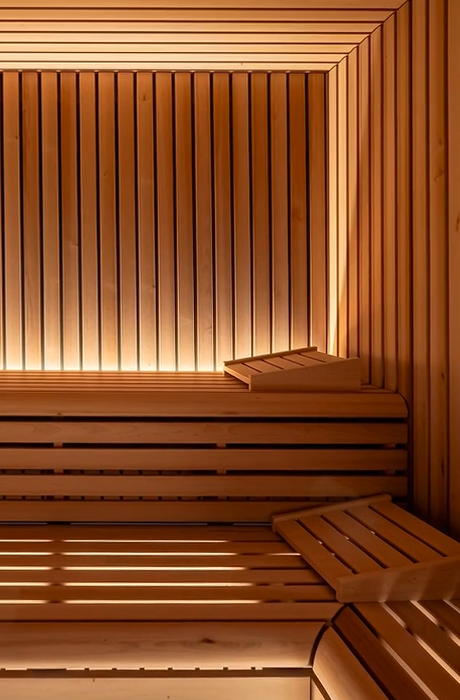
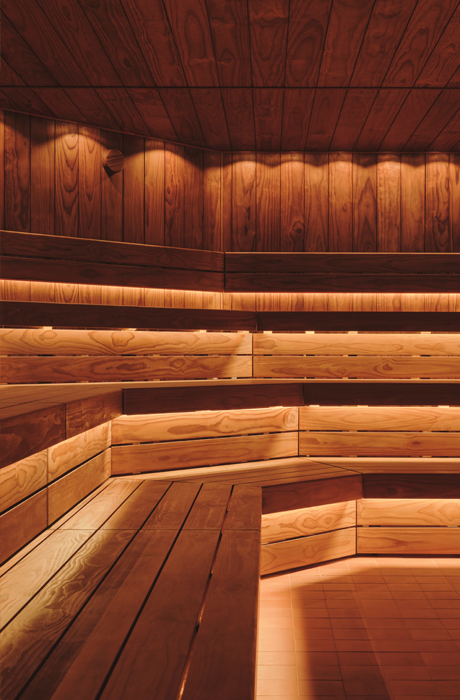
An indoor sauna becomes part of your home's architecture – a permanent wellness feature that's always within reach. Modern UK homes are increasingly designed with dedicated spaces for well-being, from spa-inspired bathrooms to basement gyms, and a thoughtfully positioned indoor sauna can elevate these environments significantly.
Space Requirements and Placement Options
Indoor saunas adapt to a surprising variety of spaces. We've successfully installed saunas in:
Bathrooms and wet rooms – The most natural location, where plumbing, drainage, and moisture management are already in place. A 2-person sauna requires approximately 1.5m x 1.5m of floor space, making it viable even in modest-sized bathrooms.
Basements and cellars – Often underutilised spaces that can be transformed into private wellness suites. The naturally cool environment actually works in your favour, as the contrast between ambient and sauna temperature becomes part of the experience.
Converted bedrooms or loft spaces – Particularly popular in properties where additional bedroom space isn't needed. These locations offer excellent privacy and can be designed as complete spa environments with adjacent changing areas.
Purpose-built extensions – For those undertaking significant home renovations, integrating a sauna into new construction allows for perfect positioning and infrastructure planning from the outset.
The key consideration isn't just available floor space but ceiling height (ideally 2.1m minimum), access to electrical supply for your sauna heater, and ensuring adequate ventilation routes to external walls or existing ventilation systems.
Installation Considerations
Installing an indoor sauna involves more than simply building a wooden room. Professional installation addresses several technical requirements:
Structural assessment – Ensuring the floor can support the combined weight of the sauna structure, benching, heater, and occupants (typically 300-500kg for a 2-4 person unit).
Moisture protection – Whilst saunas are dry-heat environments (unlike steam rooms), proper vapour barriers protect surrounding walls and prevent moisture migration into adjacent rooms. We use specialised insulation and vapour sealing systems designed specifically for sauna applications.
Electrical infrastructure – Electric sauna heaters require dedicated circuits. A 6kW heater (suitable for a 2-3 person sauna) typically requires a 32A supply, whilst larger 9kW units need 40A circuits. These must be installed by qualified electricians in accordance with BS 7671 wiring regulations.
Ventilation design – Mechanical ventilation or carefully positioned natural vents ensure six to eight complete air changes per hour without creating uncomfortable drafts or heat loss. This is perhaps the most commonly overlooked aspect of DIY installations and makes the difference between a mediocre and exceptional sauna.
For those comfortable with significant DIY projects, we offer comprehensive guidance through our self-build sauna instructions, along with all necessary materials from sauna cladding to bench boards.
The Indoor Experience
The indoor sauna experience centres on convenience and integration with your daily routine. There's an effortless quality to sauna use when it's just steps from your bedroom or bathroom, no need to dress for outdoors, no consideration of weather conditions.
Many of our clients describe their indoor saunas as transforming their relationship with heat therapy. What might have been an occasional weekend ritual becomes a regular weekday practice when the barrier to entry is simply walking down the hallway. The ability to step directly from sauna to shower to bed creates a seamless evening routine that promotes exceptional sleep quality.
Indoor saunas also offer superior climate control. The ambient temperature of your home means the sauna can be pre-heated efficiently, and the contrast between sauna heat and your home's interior (typically 18-22°C) provides the temperature differential that's central to the Finnish experience – albeit less dramatic than with outdoor installations.

Cost Considerations for Indoor Saunas
Indoor sauna costs vary considerably based on whether you're undertaking a DIY build or commissioning a bespoke installation. A self-built 2-person sauna using quality materials typically requires £3,000-6,000 in components (timber, heater, door, lighting, and fittings), plus your labour investment.
Professionally installed bespoke indoor saunas start from £30,000 as a minimum, with most projects exceeding this depending on size, specification, and the complexity of integration with your existing space. This includes all materials, expert installation, electrical work, and finishing details that ensure the sauna performs flawlessly for decades.
Please note: These figures are provided as general guidance only and should not be taken as gospel. Actual costs vary significantly based on your location, specific requirements, and the rate of change in material and labour costs. We recommend consulting with our team for accurate, up-to-date pricing for your particular project.

Outdoor Home Saunas: Creating a Garden Wellness Retreat
An outdoor sauna is fundamentally different from its indoor counterpart – not just in location, but in the entire experience it offers. Where an indoor sauna integrates seamlessly with daily routines, an outdoor sauna creates a destination, a deliberate journey from house to wellness retreat that marks the transition from everyday concerns to dedicated relaxation.
Space Requirements and Site Selection
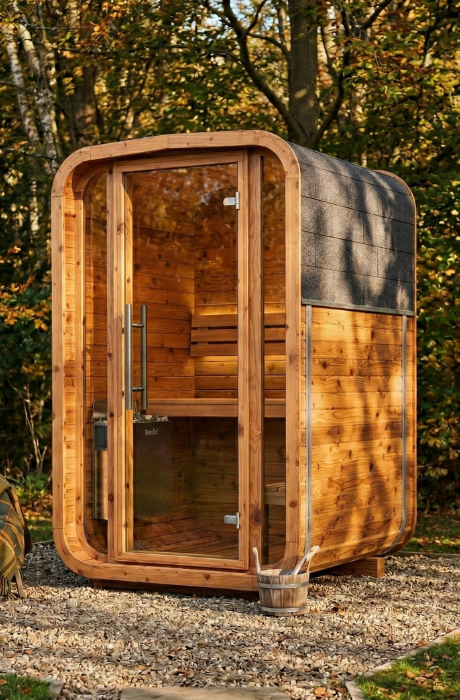
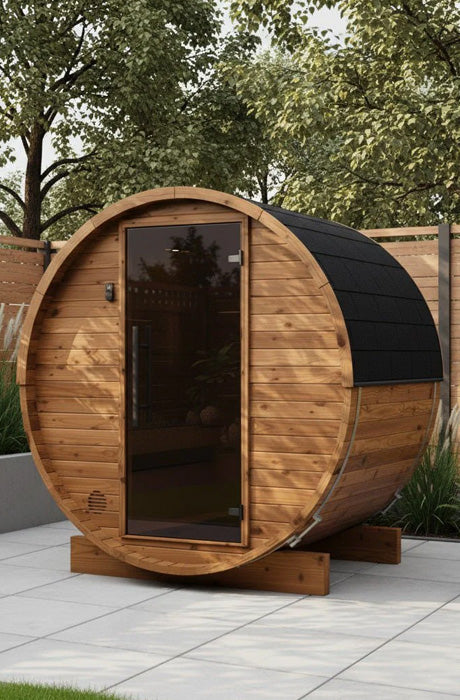
Outdoor saunas offer greater flexibility in sizing because you're not constrained by existing room dimensions. Our outdoor sauna cabins range from compact 2-person units like the EMBA® (1.5m x 1.4m footprint) to generous 5-6 person installations such as the EDEN® (2.2m x 2.2m). For those seeking distinctive design aesthetics, our traditional barrel saunas offer an iconic cylindrical form that maximises heat circulation, whilst our contemporary cube saunas deliver sleek, modern architecture. All configurations can be tailored through our bespoke outdoor sauna projects for family use or commercial applications.
Site selection involves several practical considerations:
Ground preparation – A level, well-drained base is essential. Most installations use either a concrete pad, paving slabs, or a gravel bed with compacted sub-base. The foundation must support 500-800kg for a typical cabin, more for larger installations.
Access and proximity to the house – Consider the path you'll take from the house to the sauna, particularly in winter. Some clients install lighting along the route; others embrace the experience of crossing a cold garden in darkness as part of the ritual.
Privacy and screening – Whilst sauna use is a private activity, consider sightlines from neighbouring properties, particularly if you're incorporating outdoor cooling areas or cold plunge facilities.
Utilities – Electric saunas require a power supply from your main consumer unit. This typically involves a buried armoured cable (SWA cable) run through a protective conduit. Alternatively, wood-burning sauna heaters eliminate the need for an electrical connection but require chimney installation and ongoing fuel supply.

Planning Permission and Regulations
For most UK properties, outdoor saunas fall under permitted development rights, meaning you won't need planning permission. This applies when:
-
The sauna is single-storey with a maximum eaves height of 2.5m.
-
It's positioned in your rear garden (not forward of the principal elevation)
-
It covers less than 50% of your garden area.
-
You're not in a conservation area, an Area of Outstanding Natural Beauty, or dealing with a listed building.
However, regulations vary by local authority and specific site conditions. If your property has any special designations or if the sauna will be positioned close to boundaries, we recommend confirming requirements with your local planning department before proceeding.
Building regulations typically don't apply to garden buildings under 15m² that don't contain sleeping accommodation. However, electrical work must still comply with Part P of the Building Regulations and should be undertaken by a qualified electrician.
Installation and Delivery
Our outdoor sauna cabins arrive as precision-engineered flat-pack systems. Professional installation by our experienced team ensures proper assembly, weatherproofing, and integration with power supplies, typically completed within one or two days, depending on model complexity.
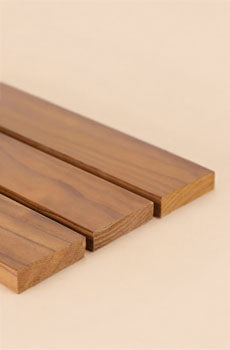
The cabins are constructed using premium thermally modified timber (either natural Thermo Pine or contemporary matte black finish), which has undergone heat treatment to enhance weather resistance, dimensional stability, and longevity. This process eliminates sugars and resins from the wood, making it highly resistant to rot, insect damage, and moisture-related issues.
Each cabin includes:
-
Complete wall, floor, and roof structure.
-
Pre-hung sauna door with toughened glass.
-
Integrated benching system.
-
Professional-grade insulation.
-
Ventilation components.
-
Full installation instructions.
The heater, sauna stones, lighting, and controls are selected separately, allowing you to choose between electric or wood-fired heating and specify exactly the features that matter to you.
The Outdoor Experience
The outdoor sauna experience is defined by contrast and connection to nature. Stepping from warmth into cold air, feeling rain on heated skin, and watching the seasons change through tinted glass transform sauna use from simple heat therapy into an immersive sensory ritual.
Nordic tradition embraces this fully. In Finland, sauna sessions are punctuated by cooling breaks, a plunge into icy water, rolling in snow, or simply standing in cold air. This temperature contrast (known as "hot-cold therapy") is central to the cardiovascular and recovery benefits that make sauna bathing so effective.
The architectural form of your outdoor sauna also shapes the experience. Barrel saunas create an intimate, cocoon-like atmosphere where the curved walls naturally circulate heat, whilst cube saunas offer generous headroom and clean sightlines that connect you more directly with your garden surroundings.
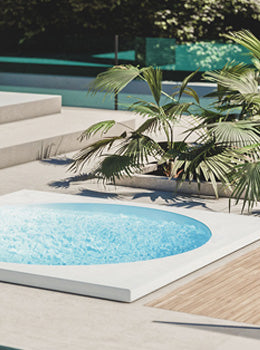
Many of our clients incorporate additional outdoor wellness elements around their saunas: cedar hot tubs for warming between sauna sessions, cold plunge pools or ice baths for contrast therapy, or simply outdoor seating areas where you can cool down gradually whilst enjoying the garden.
The outdoor sauna also becomes a social space in ways that indoor installations rarely match. There's something about the garden setting, perhaps the sense of being in a retreat rather than simply "at home" that makes sharing the experience with friends and family feel more natural and celebratory.

Cost Considerations for Outdoor Saunas
Our outdoor sauna cabins provide exceptional value because they're designed as complete systems rather than requiring full bespoke construction. Prices range from approximately £11,995 for a 2-person EMBA® model to £21,995+ for larger 4-6 person configurations like the AIRA®.
These prices include the complete cabin structure, benching, door, and insulation, but exclude the heater, stones, electrical installation, groundwork, and site-specific requirements such as extended cable runs or planning consultancy.
Additional costs to budget for include:
-
Base preparation (concrete, paving, or gravel foundation): £500-2,000.
-
Electrical installation: £800-2,500 depending on distance from house.
-
Sauna heater: £400-2,500+, depending on output and features.
-
Optional accessories (buckets and ladles, thermometers, scents, etc.): £100-500.
For larger families or those seeking truly bespoke outdoor wellness spaces, our bespoke outdoor installations start from £30,000 as a minimum and often exceed this, offering unlimited customisation in terms of size, layout, materials, and integrated features.
Please note: All cost estimates are provided for general guidance only. Actual pricing depends on your specific site conditions, chosen specifications, and current market rates for materials and labour. Different charges may apply in your location. Contact our team for precise, project-specific quotations.
Direct Comparison: Indoor vs Outdoor Saunas
Climate Control and Heating Efficiency
Indoor saunas benefit from your home's ambient temperature (typically 18-22°C), meaning the heater only needs to raise the temperature by 50-70°C to reach optimal sauna conditions. This results in faster heat-up times (typically 20-30 minutes) and lower running costs.
Outdoor saunas face more variable starting temperatures – from 25°C in summer to near freezing in winter. However, modern outdoor cabins like our thermally modified models are so well-insulated that the difference in running costs is surprisingly modest – perhaps 15-20% higher energy consumption in winter months.
Counterintuitively, many users find outdoor saunas more satisfying in winter precisely because of this greater temperature contrast, which enhances the cardiovascular benefits and makes the experience feel more invigorating.
Year-Round Usability
Indoor saunas offer consistent accessibility regardless of the weather. Whether it's raining, snowing, or dark at 5pm in January, your sauna remains equally accessible.
Outdoor saunas require a short journey across your garden, which some might view as a barrier, but many embrace as part of the ritual. Crossing a cold garden in a robe, then warming in the sauna, creates a more complete "experience" rather than just a functional health treatment.
Interestingly, we find that outdoor sauna owners often use their saunas more consistently through winter than indoor sauna owners, perhaps because the outdoor setting makes it feel like a special event rather than just another home amenity.
Installation Complexity
Indoor saunas require more extensive integration work, including moisture protection for adjacent rooms, proper ventilation connections, and installation that doesn't compromise your home's existing structure or decor. This typically necessitates professional installation unless you have significant building experience.
Outdoor saunas (particularly our pre-designed cabin models) are comparatively straightforward. Once you have a level base and electrical supply, installation is a matter of assembling the cabin structure – a process our team completes efficiently with minimal disruption.
Space Efficiency
Indoor saunas must fit within existing architectural constraints. Converting a 2m x 2m bathroom corner is feasible; converting a 3m x 3m space rarely makes architectural sense unless it's a genuinely unused area.
Outdoor saunas face fewer constraints. As long as you have garden space and meet permitted development criteria, you can choose the size and style that matches your intended use rather than accepting whatever space your home's layout happens to offer. From the space-efficient footprint of our barrel saunas to the generous interiors of our cube saunas, outdoor installations provide flexibility that indoor configurations simply cannot match.
Resale Value and Property Appeal
Both configurations add value to your property, but in different ways.
Indoor saunas appeal to luxury home buyers and those prioritising wellness amenities. They're particularly attractive in contemporary homes with spa-inspired bathrooms or dedicated gym/wellness areas. However, they're also more polarising; not every buyer will value a sauna in the same way they'd value, say, an additional bathroom.
Outdoor saunas have a broader appeal because they don't compromise existing living space. They're increasingly viewed similarly to other premium garden structures – not just a sauna but an elegant garden room that could be repurposed if desired. They're particularly popular in Airbnb properties and holiday lets, where they provide a distinctive premium amenity.
Ongoing Maintenance
Indoor saunas require less weather-related maintenance since they're protected from the elements. Regular cleaning, occasional timber treatment with sauna cleaning products, and ensuring ventilation systems remain clear comprise the main upkeep.
Outdoor saunas need periodic checks of external timber (though thermally modified wood is exceptionally durable), ensuring drainage remains effective, and confirming that seals around doors and windows stay weather-tight. Our thermally modified cabins are designed to withstand British weather with minimal intervention, but yearly inspections help catch any minor issues before they become significant.
Making Your Decision: Key Questions to Consider
How Will You Use Your Sauna?
If sauna use will be part of a daily or near-daily routine, perhaps a relaxing heat session before bed – an indoor sauna's convenience may prove invaluable. The minimal friction between "thinking about a sauna" and actually being in one encourages consistent use.
If you view the sauna as a weekend ritual, a destination for deliberate relaxation rather than a quick daily practice, an outdoor installation offers richer sensory engagement and creates more of an "event" that marks the boundary between work week and restoration.
Who Will Use It?
Solo users or couples favour smaller saunas that can be positioned indoors without sacrificing significant space. The 2-person configurations we offer work beautifully in either setting.
Families or those who enjoy sauna as a social activity often find outdoor cabins more appropriate, both because they can accommodate 4-6 person capacity and because the garden setting feels less intrusive for extended sessions with conversation and cooling breaks.
What's Your Property Configuration?
Homes with generous bathrooms or basement spaces lend themselves to indoor installations. Properties with well-established gardens but limited interior space are natural candidates for outdoor saunas.
Urban properties with small gardens but large homes might prioritise indoor installations; rural properties with acres of land but modest houses often prefer outdoor saunas that take advantage of views and surroundings.
What's Your Budget Scope?
As discussed in our cost sections, indoor and outdoor saunas occupy different price ranges depending on whether you're building bespoke or selecting pre-designed systems. Generally speaking:
-
Self-built indoor saunas: £3,000-6,000 in materials.
-
Professional bespoke indoor installations: £30,000+ (minimum, often exceeding this)
-
Outdoor cabin saunas: £11,995-22,000 for cabin + £2,000-5,000 for installation, groundwork, and electrical.
-
Bespoke outdoor installations: £30,000+ for fully custom designs.
These aren't directly comparable because they include different scopes of work, but they provide a framework for understanding what each approach entails financially.
How Important Is the Journey?
This might sound esoteric, but it's genuinely significant. Do you want sauna use to feel seamless and integrated with your daily routines, or do you value the physical and psychological transition that comes with stepping outside, crossing your garden, and entering a dedicated wellness space?
Neither answer is "correct" – they reflect different philosophies about how you want to engage with heat therapy. Some of our clients choose outdoor saunas because that journey enhances the experience; others choose indoor installations precisely to eliminate friction between intention and action.
Hybrid Approaches and Future Flexibility
Some homeowners install both configurations over time, an indoor sauna for weekday convenience and an outdoor cabin for weekend entertaining and deeper relaxation. Whilst this represents significant investment, it recognises that indoor and outdoor saunas serve genuinely different purposes.
Others begin with whichever configuration suits their current needs and circumstances, with the understanding that a well-designed sauna of either type adds lasting value to their property. A professionally installed indoor sauna that becomes part of your home's architecture isn't a temporary feature; it's a permanent enhancement. Similarly, our thermally modified outdoor cabins – whether you choose the iconic form of our barrel saunas or the contemporary lines of our cube saunas – are built for decades of use, not disposable garden furniture.
The Finnmark Approach: Expertise, Quality, and Authentic Design
Whether you ultimately choose an indoor or outdoor configuration, what matters most is that the sauna is designed and constructed properly. We've seen too many disappointing installations where inadequate materials, poor ventilation design, or undersized heaters create an environment that's merely "hot and wooden" rather than delivering the profound relaxation and health benefits of an authentic Finnish sauna.
Our approach centres on three principles:
Authentic materials – We source the same Nordic timbers, Finnish heaters, and specialised components used in Scandinavia, ensuring your sauna performs to proper standards rather than simply resembling one aesthetically.
Technical precision – Proper ventilation, correct insulation, appropriate heater sizing, and attention to details like bench ergonomics and lighting placement separate mediocre from exceptional saunas.
Long-term support – From initial consultation through installation and for years afterwards, our team of sauna specialists remains available to answer questions, provide guidance, and ensure your sauna continues delivering the experience you invested in.
We offer free consultations where we can discuss your specific circumstances, explore your options, and provide honest guidance about which configuration best suits your needs – whether that's an indoor sauna, outdoor cabin, or something entirely bespoke.
Conclusion: Both Paths Lead to Exceptional Wellness
The choice between indoor and outdoor saunas isn't about identifying an objectively "better" option – it's about recognising which configuration aligns with how you live, how your property is configured, and what kind of sauna experience resonates with you.
Indoor saunas offer seamless integration, consistent accessibility, and the convenience of being part of your home's existing comforts. They excel when sauna use is frequent, routine, and valued for its efficient contribution to daily wellness.
Outdoor saunas create destination experiences, engage you more fully with seasonal changes and temperature contrasts, and offer space for larger installations without compromising your home's interior. They excel when the sauna serves as a deliberate retreat, valued for the ritual's richness.
Both configurations, when properly designed with high-quality materials and expert installation, deliver the profound physiological and psychological benefits that have sustained Finnish sauna culture for centuries. The sauna that's right for you is the one you'll use consistently, enjoy thoroughly, and value as a lasting addition to your home and life.
We invite you to explore our collections of indoor saunas and outdoor sauna cabins, review our comprehensive sauna-building guides, and contact our team when you're ready to discuss your vision.
Whether you're installing a compact sanctuary in an underused bathroom or creating a statement wellness retreat in your garden, Finnmark Sauna brings the expertise, materials, and craftsmanship to ensure your investment delivers authentic Finnish sauna experiences for decades to come.
Frequently Asked Questions
Can I install a sauna in a small bathroom?
Yes, absolutely. Many of our most successful indoor sauna installations are in surprisingly compact spaces. A 2-person sauna requires approximately 1.5m x 1.5m of floor space, which can be achieved by utilising a bathroom corner or converting a section of a larger bathroom. The key considerations are adequate ceiling height (minimum 2.1m), access to electrical supply, and proper ventilation. Our team can assess your specific bathroom during a free consultation and recommend configurations that maximise the available space whilst ensuring comfortable, authentic sauna performance.
How long do outdoor sauna cabins last in British weather?
Our outdoor sauna cabins – including our traditional barrel saunas and modern cube saunas – are constructed using thermally modified timber, a material specifically engineered for long-term outdoor performance. The thermal modification process uses heat and steam to fundamentally alter the wood's cellular structure, making it highly resistant to moisture, rot, and insect damage. With appropriate annual maintenance – primarily cleaning and occasional checking of seals and weatherproofing – these cabins regularly perform excellently for 20-30+ years. The thermally modified construction actually exceeds the durability of many traditional garden structures, making it a sound long-term investment.
Do I need a plumber for a home sauna installation?
Generally, no. Traditional Finnish saunas are dry-heat environments that don't require a water supply or drainage (unlike steam rooms or Turkish baths). The "water" aspect of sauna use involves a small amount of water ladled onto hot stones to create steam ("löyly"), which is provided manually via a bucket and ladle rather than plumbed connections. However, many people choose to position indoor saunas near bathrooms specifically for the convenience of showering before and after sessions, and outdoor sauna owners sometimes install adjacent shower facilities or cold plunge pools, which would require plumbing work.
What's better for an outdoor sauna – electric or wood-burning heater?
Both options deliver authentic Finnish sauna experiences, and the choice depends largely on your priorities and site conditions. Electric heaters offer precision temperature control (often via smartphone apps with WiFi-enabled controllers), faster heat-up times, and minimal maintenance. They're ideal for daily use and urban or suburban settings where convenience matters. Wood-burning heaters provide a more traditional sensory experience – the scent of burning wood, the ritual of building and tending the fire, and the gentle, radiant heat they produce. They're particularly suited to rural properties, off-grid locations, or when you specifically value the connection to traditional sauna practice. Both heat the sauna equally well; the difference is in the experience and practical considerations.
Will a sauna increase my home's value?
A professionally installed, high-quality sauna generally adds value to your property, though the degree varies based on your local market and buyer preferences. In areas where wellness amenities are valued (urban professional markets, affluent suburbs, rural retreats), saunas are increasingly viewed as premium features comparable to home gyms or spa bathrooms. Outdoor sauna cabins tend to have broader appeal because they don't compromise interior living space and can be appreciated as elegant garden architecture even by buyers who aren't specifically seeking a sauna. The key to maximizing value impact is ensuring the sauna is properly installed, uses quality materials, and integrates thoughtfully with your property's overall aesthetic and functionality.
Can I use my sauna in winter?
Absolutely – winter is arguably when saunas are most rewarding. The greater temperature contrast between cold outdoor air and sauna heat enhances the cardiovascular benefits and makes the experience more invigorating. Indoor saunas perform consistently year-round, whilst outdoor saunas may require slightly longer pre-heating in very cold weather (an extra 10-15 minutes) but are so well-insulated that they maintain heat efficiently once up to temperature. Many sauna enthusiasts specifically embrace winter sauna sessions, following the traditional Nordic practice of alternating between heat and cold exposure – stepping from the sauna into cold air or even snow creates profound physiological responses that promote recovery, immune function, and mental clarity.
How much does it cost to run a home sauna?
Running costs depend on heater size, how frequently you use the sauna, and your electricity rates, but are generally very modest. A typical 6kW electric heater (suitable for a 2-3 person sauna) running for a 1-hour session (including 30 minutes pre-heating and 30 minutes of use) consumes approximately 6kWh of electricity. At current average UK electricity rates of around £0.25 per kWh, that's roughly £1.50 per session. For someone using their sauna three times weekly, annual running costs would be approximately £230. Larger saunas with 9kW heaters cost proportionally more (around £2.25 per session), whilst wood-fired saunas' fuel costs depend on wood prices in your area but typically range from £1-3 per session.
These figures are estimates only; your actual costs depend on your specific circumstances and local utility rates.
Do I need special flooring for an indoor sauna?
Yes, the flooring beneath and within your indoor sauna requires careful consideration. The floor should be moisture-resistant, easy to clean, and ideally warm underfoot. Common solutions include ceramic or porcelain tiles, vinyl flooring, or sealed concrete. Inside the sauna itself, we typically install wooden duckboards (slatted wooden platforms) that provide comfortable footing and allow air circulation. These can be removed for cleaning. The structural floor beneath must be able to support the sauna's weight (typically 300-500kg including occupants) and should ideally have a slight drainage fall if positioned in a wet room, though this isn't strictly necessary for sauna use. During our consultation and installation process, we assess your specific floor situation and recommend appropriate solutions.
Can I add a sauna to my garden room or home gym?
Yes, this is an increasingly popular approach that creates comprehensive wellness spaces. The key considerations are ensuring adequate space (the sauna itself plus circulation room), proper electrical supply for the heater, and ventilation that prevents moisture from affecting other equipment or furnishings in the shared space. We've successfully designed sauna installations that share spaces with home gyms, yoga studios, and garden offices. The sauna should be treated as a separate enclosed environment with its own ventilation system rather than simply heating one corner of a larger room. This approach works particularly well in purpose-built garden rooms or converted garages where you can create distinct zones for different activities whilst sharing the same building footprint.
What maintenance does a home sauna require?
Saunas require surprisingly little maintenance when properly built with quality materials. Regular tasks include:
Weekly – Wipe down benches and walls with a clean cloth to remove perspiration residue. Allow the sauna to dry completely between uses by leaving the door ajar for 15-20 minutes after each session.
Monthly – Clean the floor, check the heater stones to ensure they're positioned correctly and haven't fractured, and wipe down any glass surfaces.
Quarterly – Inspect ventilation grilles to ensure they're clear of debris, check that door seals remain intact, and verify all lighting and electrical components are functioning correctly.
Annually – For outdoor saunas, inspect external timber for any weathering, check the roof for water ingress, and verify drainage remains effective. Apply appropriate wood treatments if recommended by the manufacturer. For indoor saunas, confirm that surrounding walls and floors show no signs of moisture infiltration.
Our sauna cleaning products are specifically formulated for Nordic timber and won't damage the wood or affect its heat performance. We provide detailed maintenance guidelines with every installation and remain available to answer questions long after your sauna is commissioned.


